
San Patricio Court Records After Arrest
After a San Patricio County arrest, the record path usually moves from arrest to jail booking, then to first appearance, prosecutor review, and finally to the court record for any filed charge. The person is booked at the San Patricio County Jail, the arresting agency reports the arrest facts, and the magistrate process addresses warnings and bond. The court record is a separate step. It forms when the prosecutor reviews the arrest report and files, presents, or declines a formal charge. The San Patricio County District Attorney page is the local prosecutor source for that stage, and the county courthouse is the main public framework for criminal-case activity after filing.
The jail record and the court record should not be read as the same thing. Booking charges can be broad, incomplete, or later changed. Filed court charges can be amended, reduced, dismissed, indicted, or disposed by plea, trial, deferred adjudication, or other order. For the custody side, use San Patricio jail inmate records. For booking-photo questions tied to the arrest, use San Patricio jail mugshots and booking photos. Court records after a jail arrest are best checked through the clerk that handles the case level.
The San Patricio County District Attorney page is the source for prosecutor context after arrest.
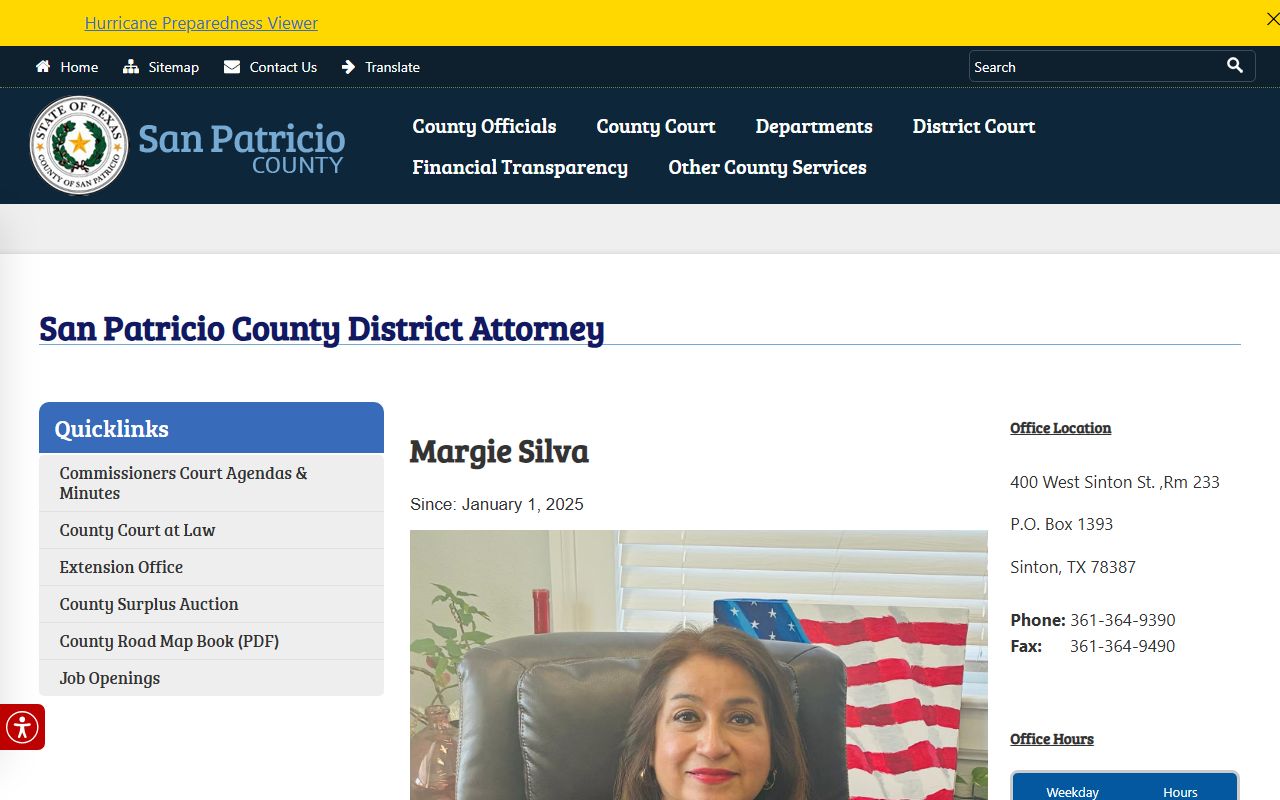
That office context matters because the prosecutor's filing decision is what turns many arrest facts into a court case record.
San Patricio Court Records Search After Arrest
San Patricio County court records after arrest should start with the correct clerk. Felony cases usually route through the district courts and District Clerk. County-level criminal cases may route through the County Clerk and the county courts at law. The District Clerk page names Heather B. Marks, gives public hours of Monday through Friday, 8:00 a.m. to 4:30 p.m., and directs records requests to 361-364-9377, option 2, or to the email link on that page. The County Clerk page names Gracie Alaniz-Gonzales at 400 W. Sinton Street, Room 124, with the same weekday office hours, phone 361-364-9350, option 3 for Criminal and option 4 for Records.
Both local clerk pages point to electronic court access, but the limits matter. The District Clerk page describes re:SearchTX for civil and family case records. The County Clerk page describes re:SearchTX for civil case access and also links county public search tools for official public records. That does not prove a complete criminal case search for every San Patricio arrest. For a criminal charge, use the portal where available, then call the clerk with the defendant name, date of birth if known, arrest date, and any case number or cause number.
The re:SearchTX access portal is the state platform referenced by San Patricio clerk pages for electronic records where available.
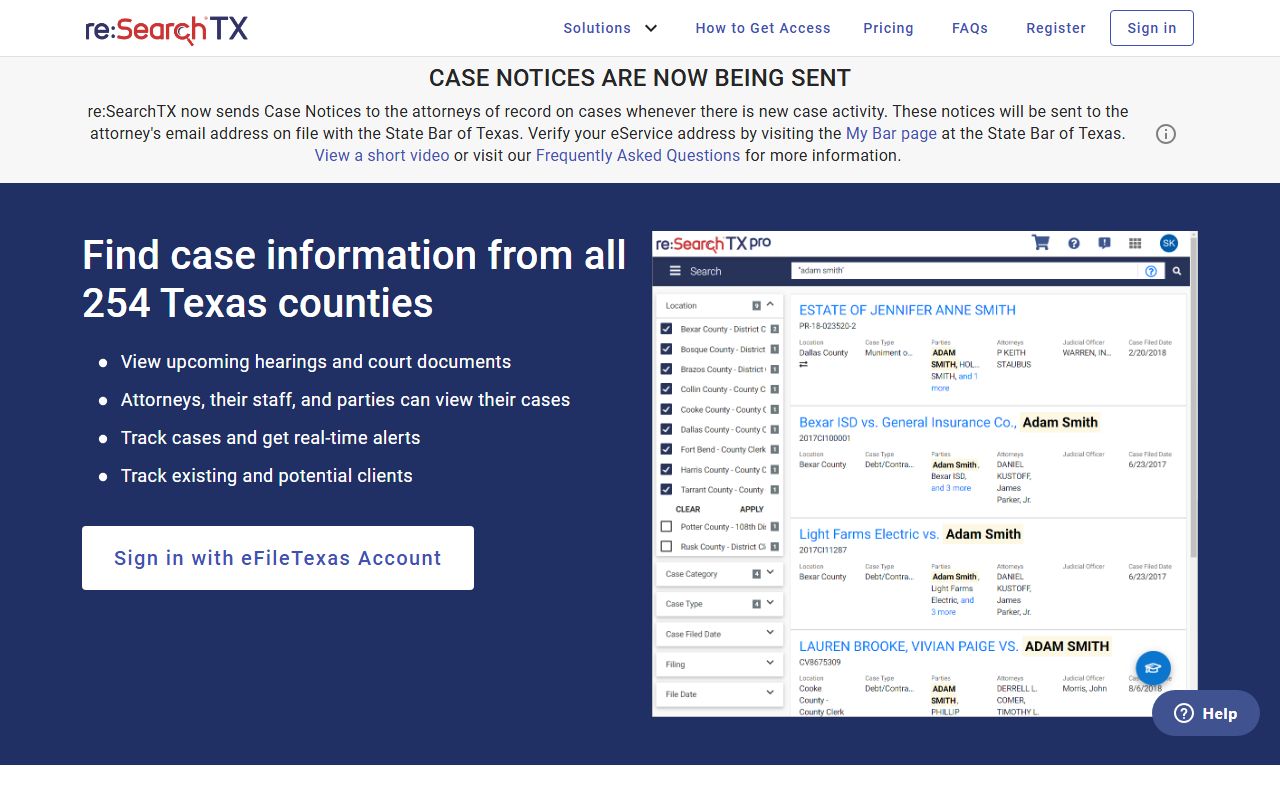
Use it as an access channel, not as proof that every criminal arrest case or booking detail is online.
| Field or Access Point | Type | Required | San Patricio Limitation |
|---|---|---|---|
| Login or account | Account access | May be required | Some functions in re:SearchTX require registered access. |
| Party name or case search | Search field | Varies | Exact static labels were not captured, so verify inside the portal. |
| Case or cause number | Search field | Optional where available | Best when a clerk, bond paper, or notice gives the number. |
| Court or county filter | Filter | Optional | Coverage depends on the participating court and record type. |
| Clerk request | Phone or email | Needed for gaps | Criminal coverage may require District Clerk or County Clerk contact. |
San Patricio Clerk Records
The San Patricio County District Courts page lists the 36th District Court with Judge Starr Bauer, the 156th District Court with Judge Patrick L. Flanigan, and the 343rd District Court with Judge Janna Whatley. It also gives PO Box 700, Sinton, TX 78387, phone 361-364-9310, and fax 361-364-9410. District court records become important when an arrest leads to a felony filing, grand-jury action, probation matter, or other district-level criminal case.
The District Clerk page handles district-court records and gives the records-request phone option. The County Clerk page handles county criminal and records routing through its phone menu. The clerk is the best office for filed court records, settings, documents in the court file, and dispositions. The sheriff and jail are still the better route for booking sheets, jail logs, and custody facts that were not filed in court.
The San Patricio District Clerk source page shows the records request route and electronic-access notes.
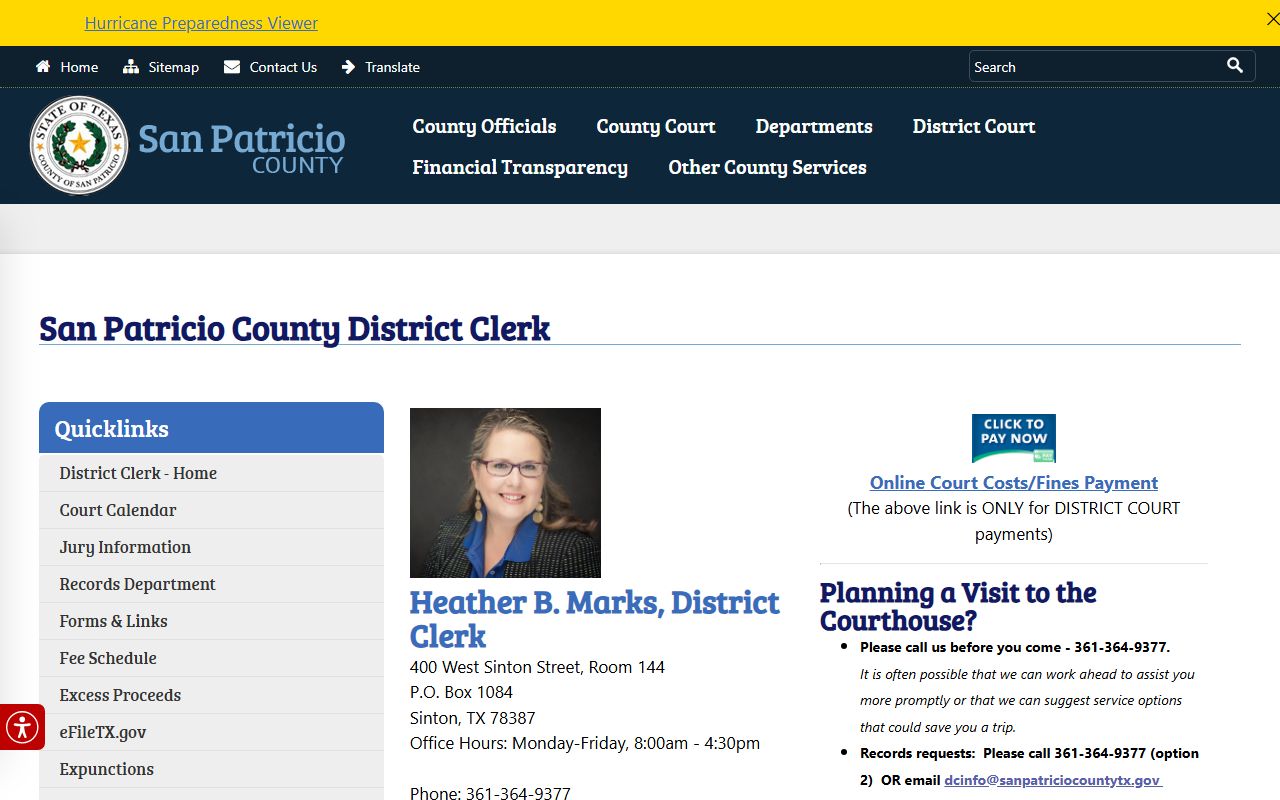
That records option is the practical fallback when a district criminal case is not visible through a public portal.
The San Patricio County Clerk source page gives criminal and records phone options for county-level matters.
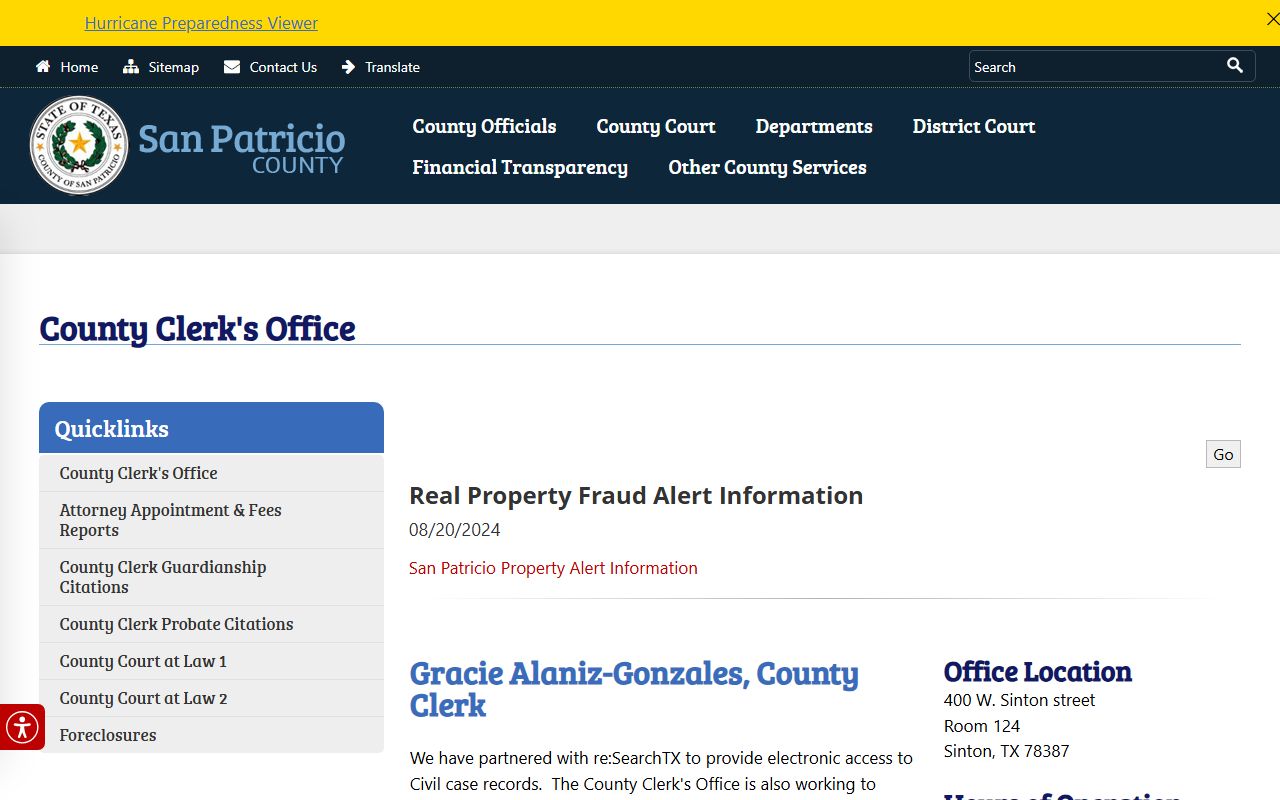
Those phone options are useful when a misdemeanor or county-court record is the court record tied to the arrest.
San Patricio Charging Documents
Texas court records after a San Patricio arrest often turn on the charging document. A complaint is a sworn allegation that can begin a criminal case. An information is a prosecutor-filed charging paper used for certain criminal cases. An indictment is returned by a grand jury and is common in felony procedure. These papers do not have the same role as the jail booking entry. The booking entry says what the person was arrested or held for at intake. The court charging paper states what the government filed in court.
The eFileTexas system is referenced by local clerk pages for filing context, but eFileTexas is not a public jail roster or a mugshot search. It helps explain how papers can enter the case file after arrest. The public record copy or docket access still depends on the clerk, the court, and any rule that limits access to a document.
| Document | Who Uses It | Why It Matters After Arrest |
|---|---|---|
| Complaint | Officer, complainant, or prosecutor through sworn facts | Can start or support a criminal case and first charging record. |
| Information | Prosecutor | Sets out a filed charge without a grand-jury indictment where allowed. |
| Indictment | Grand jury | Shows that the grand jury returned a felony charge for court prosecution. |
San Patricio Charge Status Records
Charge status is the part of the court record that most often changes after a jail arrest. A charge may be pending while the case is active. It may be amended if the wording, level, or count changes. It may be reduced to a lesser offense, dismissed by the prosecutor or court, or no-billed by a grand jury. A final disposition is the outcome, such as conviction, dismissal, acquittal, plea, or deferred adjudication. One arrest can produce more than one charge, and each charge can have a different status.
| Status | Plain Meaning | Where To Verify |
|---|---|---|
| Pending | The charge has been filed and has no final disposition. | District Clerk, County Clerk, or court docket. |
| Amended | The charge text, count, or level changed after filing. | Filed court documents and docket entries. |
| Reduced | The prosecution moved to a lower charge or lesser offense. | Disposition entry, plea papers, or court order. |
| Dismissed | The prosecution ended for that charge without conviction. | Dismissal order or docket disposition. |
| No bill | The grand jury did not return an indictment. | District court or District Clerk record. |
| Indicted | The grand jury returned a felony charge. | Indictment and district-court docket. |
Note: If the court charge is missing online, contact the clerk before assuming the arrest produced no filed case.
San Patricio Bond Court Records After Arrest
Bond begins near the arrest stage but can become part of the court record. Texas Code of Criminal Procedure Article 15.17 covers the magistrate-warning process after arrest, and Chapter 17 governs the bail framework courts use when setting bond. San Patricio County official pages did not provide a local bond schedule or online bond portal. The safest route is to verify the specific amount, bond type, payment location, accepted payment method, and release conditions with the jail, magistrate, court, or clerk before anyone pays money.
Cash bond, surety bond, personal bond, property bond, and no-bond status have different effects. A cash bond is money posted as security. A surety bond uses a licensed bail bond company. A personal bond, often called PR bond, releases a person on written promise and conditions. A no-bond hold means release is blocked until a court changes the hold or another legal barrier is cleared. A detainer is a request or hold from another agency, such as another county, parole, federal authorities, or immigration officials.
Bond law: Texas Code of Criminal Procedure Chapter 17 supplies the statewide bail framework. San Patricio County bond facts still need local verification through the jail, court, or clerk.
San Patricio Warrant Court Records After Arrest
No official San Patricio County public active-warrant search was located on the county site. The sheriff page under Sheriff Oscar Rivera points users to VINELink for custody status, not to a warrant database. A warrant arrest may still create a jail booking and a later court record. Bench warrants and capiases often connect to an existing court case, while a new arrest warrant may lead to a new booking, magistrate proceeding, and filed charge.
For warrant questions, use official routing. The Sheriff's Office is at 300 North Rachal in Sinton and lists 361-364-9600. The jail lists 361-364-9630 for custody and jail operations. The district courts list 361-364-9310. The District Clerk and County Clerk records options can help with filed cases. Municipal or justice court warrants may need the issuing court. Do not rely on an unofficial lookup to resolve a warrant, bond, or hold.
The San Patricio District Courts source page lists the courts that may handle felony records and court-issued warrants after arrest.
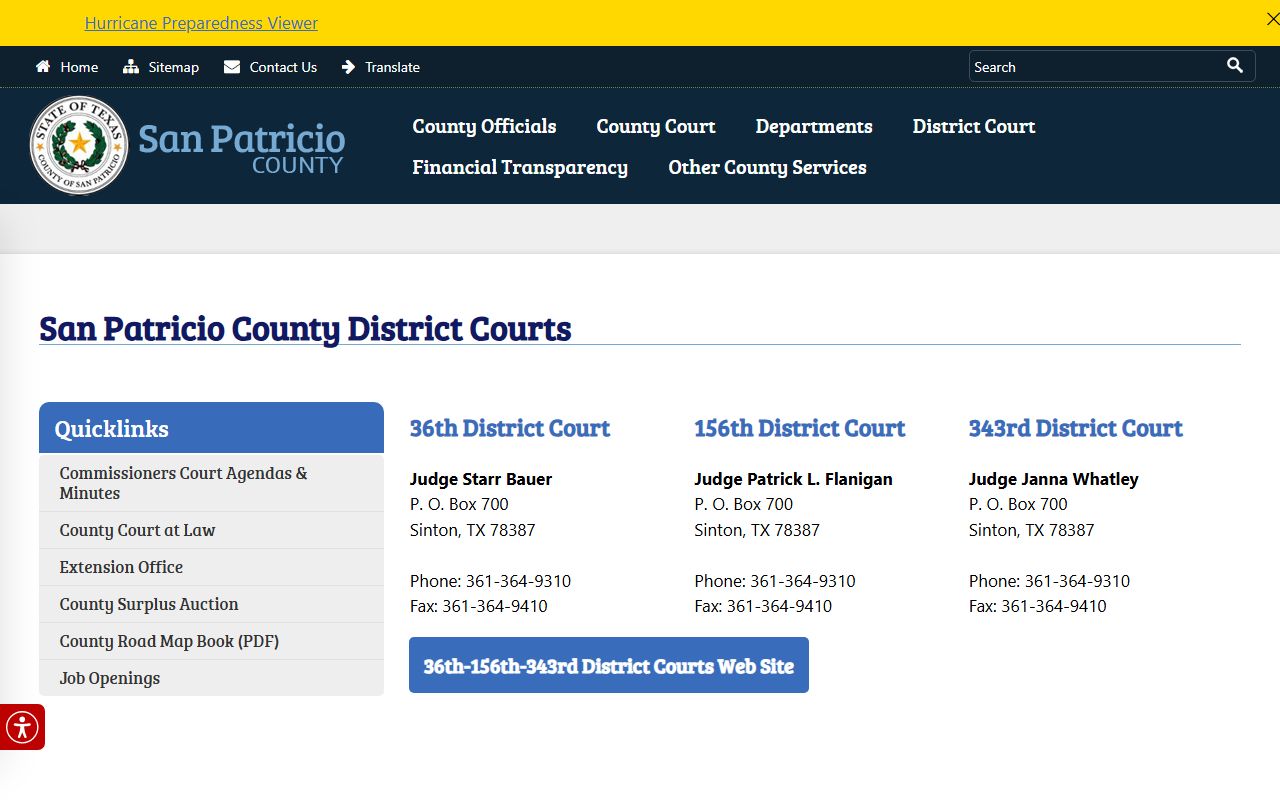
Use the court source for case-level routing, then use the clerk for records access and document requests.
Charge Versus Conviction
An arrest charge is an accusation or custody reason. A filed court charge is the prosecutor's formal accusation. A conviction is a final legal result after a plea, verdict, or other qualifying disposition. Court records after a jail arrest can show all three stages, but they should not be treated as the same fact. The difference is important for employment, licensing, housing, and immigration questions, where the legal effect of a pending charge can be very different from a conviction.
Charge
A charge is an allegation. It may begin with arrest facts and then appear as a complaint, information, or indictment. It can be pending, changed, reduced, or dismissed.
Conviction
A conviction follows a plea, verdict, or court disposition that finds guilt. It carries a different legal weight than an arrest or unresolved charge.
Sealed Versus Expunged Records
Texas uses more than one path for limiting public access to criminal records. Expunction under Texas Code of Criminal Procedure Chapter 55 can remove eligible arrest and case records after qualifying outcomes, such as certain dismissals, acquittals, pardons, or other statutory grounds. Sealing or nondisclosure is different. It limits public access to certain criminal-history information but does not always destroy the record or block every agency use.
Sealed or Nondisclosed
The public view is limited, but some courts, law enforcement agencies, licensing bodies, or authorized users may still have access under Texas law.
Expunged
Eligible records are removed or destroyed under a court order. Agencies holding the record need the order before correction or removal steps occur.
The Texas Public Information Act also matters. Texas Government Code Section 552.021 gives the baseline access rule for public information, while law-enforcement exceptions can restrict release. Section 552.108(c) preserves access to basic information about an arrested person, an arrest, or a crime even when some law-enforcement material is withheld.
The San Patricio Public Information Officer source page gives the county open-records contact for jail or law-enforcement records outside the court file.
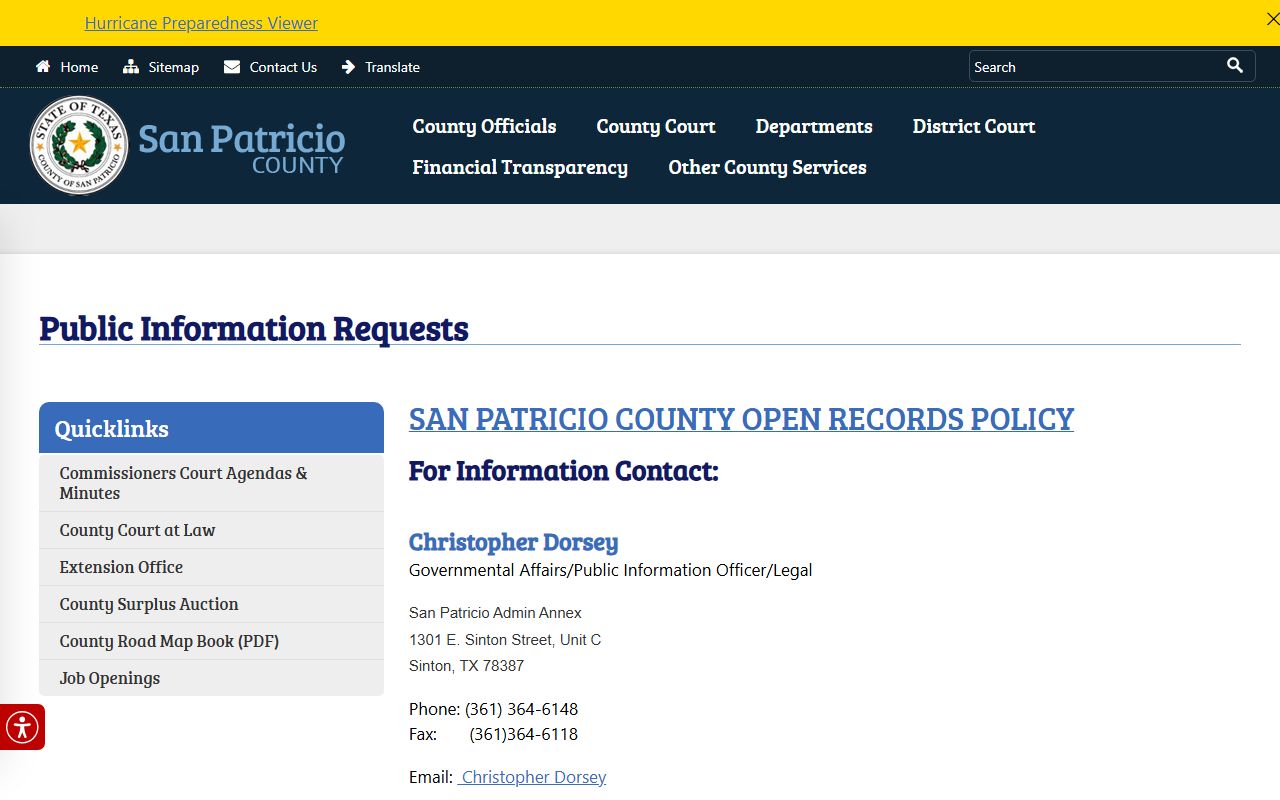
Use that route for booking sheets, incident reports, and jail records that the clerk does not maintain.